
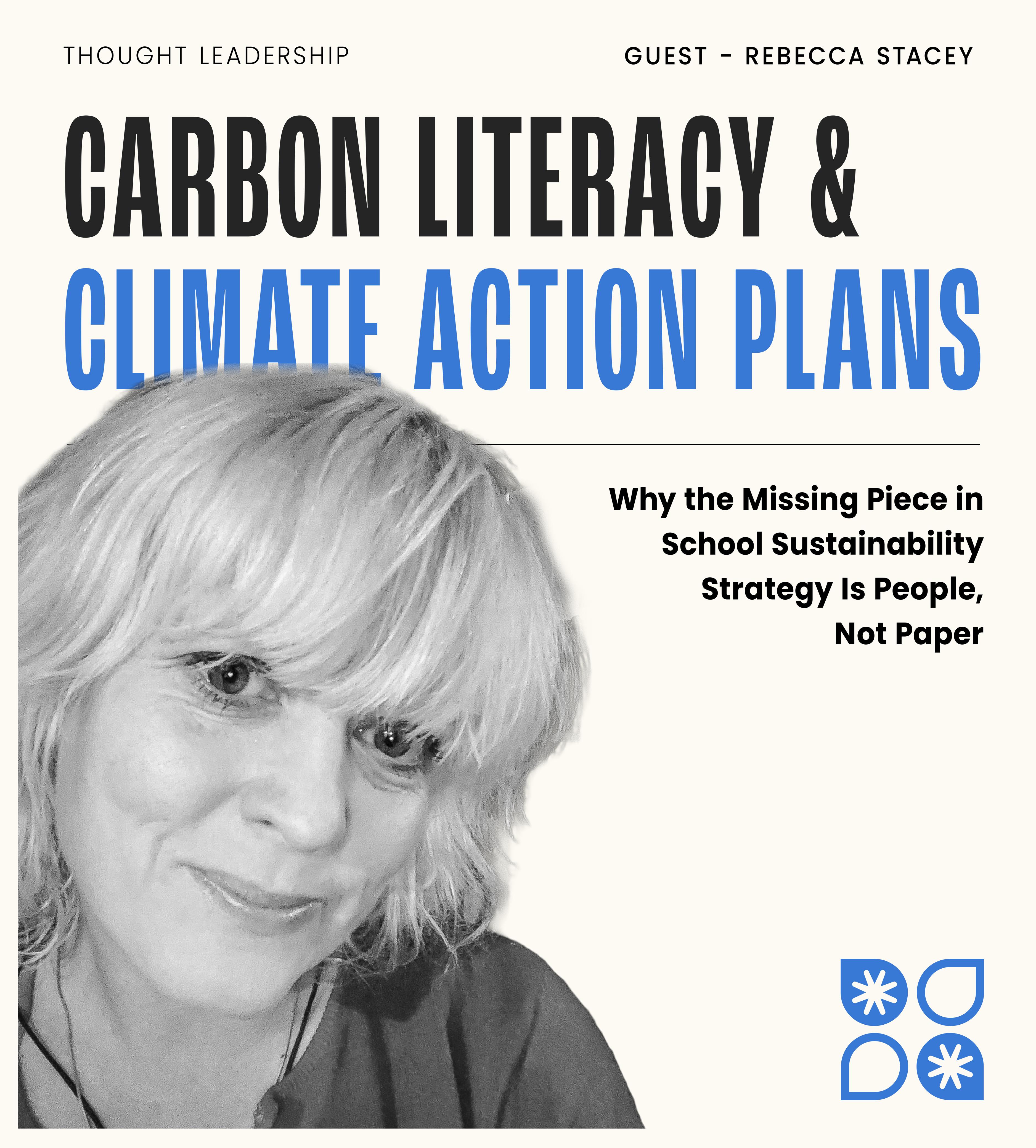
Why the Missing Piece in School Sustainability Strategy Is People, Not Paper
Schools are being asked to develop climate action plans, embed sustainability into strategy, and demonstrate measurable progress. The ambition is welcome. The challenge is making it meaningful.
You can have the most carefully written sustainability strategy, complete with targets, timelines and polished presentation. But if staff do not understand why it matters, or students cannot connect their daily actions to the bigger picture, that plan risks sitting on a shelf rather than creating real change.
That is where Carbon Literacy can help.
A Personal Journey into Climate Education
I’m working to tackle the climate crisis through education, helping people understand the challenges, communicate the solutions, and gain the tools to make a difference at work, at home and in their communities.
After many years working in school improvement across the country, I completed a United Nations Climate Change course in 2019, becoming the first Head Teacher to do so. That experience prompted a gradual move into a new career direction.
In 2022, I stepped out of school leadership, began an MSc in Zero Carbon Communities at the University of the Highlands and Islands, and moved fully into climate education. Today, I deliver Carbon Literacy for Futureproof Cumbria, work as Schools Coordinator for The Carbon Literacy Project, and facilitate Climate Fresk workshops.
Schools Know the Challenge of New Strategies
I understand the pressures school leaders face when a new national priority arrives.
When I first started teaching, schools were implementing the School Sports and Out of Hours Learning strategy. It often meant endless audits, planning exercises and attempts to align activities with multiple targets. Many leaders will recognise that same feeling today with climate action planning.
Schools are expected to build sustainability into strategic plans and be accountable for outcomes. Yet the real question is not whether a plan exists, but whether it changes behaviour, culture and decision-making across the organisation.
What Carbon Literacy Brings
Carbon Literacy is an award-winning, internationally recognised programme developed by The Carbon Literacy Project. It gives people a practical understanding of climate change, the carbon cost of everyday activities, and the actions they can take in response.
Most importantly, it turns awareness into commitment. Participants leave with practical actions they can implement, rather than simply more information.
For schools, that matters enormously. Climate action plans do not succeed through leadership documents alone. It is teachers, support staff, site teams, catering teams, governors and students who bring them to life each day.
Carbon Literacy creates a shared language and shared understanding across the whole school community. It builds confidence, encourages ownership, and helps individuals see where their own role connects to the wider mission.
Strengthening the Work Already Underway
One of the most valuable aspects of Carbon Literacy is that it does not require schools to start again.
Where a climate action plan already exists, it strengthens it. It gives strategy a human backbone. Staff begin to understand not only what the school is doing, but why it matters. That shift in understanding is what creates genuine commitment and lasting momentum.
The same applies to estates and operational projects. Many schools are investing in retrofit programmes, solar PV, energy efficiency measures and more sustainable procurement. These initiatives are vital, but they are far more effective when the whole community is engaged in supporting them.
The infrastructure and the behaviour change must work together.
A Growing Movement in Education
Recently, the first schools have achieved Carbon Literate Educator status. This recognition is awarded where a meaningful proportion of staff have completed training and the school can demonstrate climate commitment beyond the classroom.
These schools are becoming examples of what effective climate leadership looks like in practice. They are showing how sustainability can improve health, reduce costs, develop positive habits and create opportunities for student leadership.
This matters for pupils, communities, trusts and governors alike. It also matters as accountability frameworks begin to place greater attention on sustainability and long-term resilience.
The Reality Schools Are Facing
The climate challenge for schools is no longer a future issue.
When I ran focus groups for the development of the School Staff Carbon Literacy course, leaders spoke about rising energy costs, food pressures, flooding, overheating buildings and growing climate anxiety among students. Some described outdoor areas becoming unusable during heatwaves. Others spoke about parts of their grounds flooding for the first time.
The pressure on leaders is significant. But schools do not need to tackle it alone, and they do not need to tackle it only from the top down.
Final Thought
Carbon Literacy is one of the most practical, people-centred tools available to schools today. It helps turn climate action plans from documents into culture, and from ambition into action.
For many schools, it may be the missing piece that makes their strategy succeed.
If you would like to explore how Carbon Literacy could work in your school or trust, I would love to have that conversation.
Rebecca.stacey@carbonliteracy.com
About the Author
Rebecca Stacey is a climate education specialist with extensive experience in school leadership, school improvement and sustainability strategy. A former Head Teacher, Rebecca became the first Head Teacher to complete a United Nations Climate Change course in 2019, an experience that inspired her transition into climate-focused education and consultancy.
She is currently undertaking an MSc in Zero Carbon Communities at the University of the Highlands and Islands and works as Schools Coordinator for The Carbon Literacy Project. Rebecca also delivers Carbon Literacy training for Futureproof Cumbria and facilitates Climate Fresk workshops, helping schools, trusts and communities turn climate ambition into practical action.
Rebecca is passionate about equipping educators and young people with the knowledge, confidence and tools they need to respond to the climate challenge and create meaningful change.
