
Energy Case Study
St Mary’s CE High School – Delivering Energy Savings Through a Lighting as a Service Upgrade
Project Summary
Client: St Mary’s CE High School, Cheshunt
Project: Whole-site LED lighting upgrade
Delivery Model: Lighting as a Service (LaaS) – no upfront capital cost
Delivery Period: January – March 2025
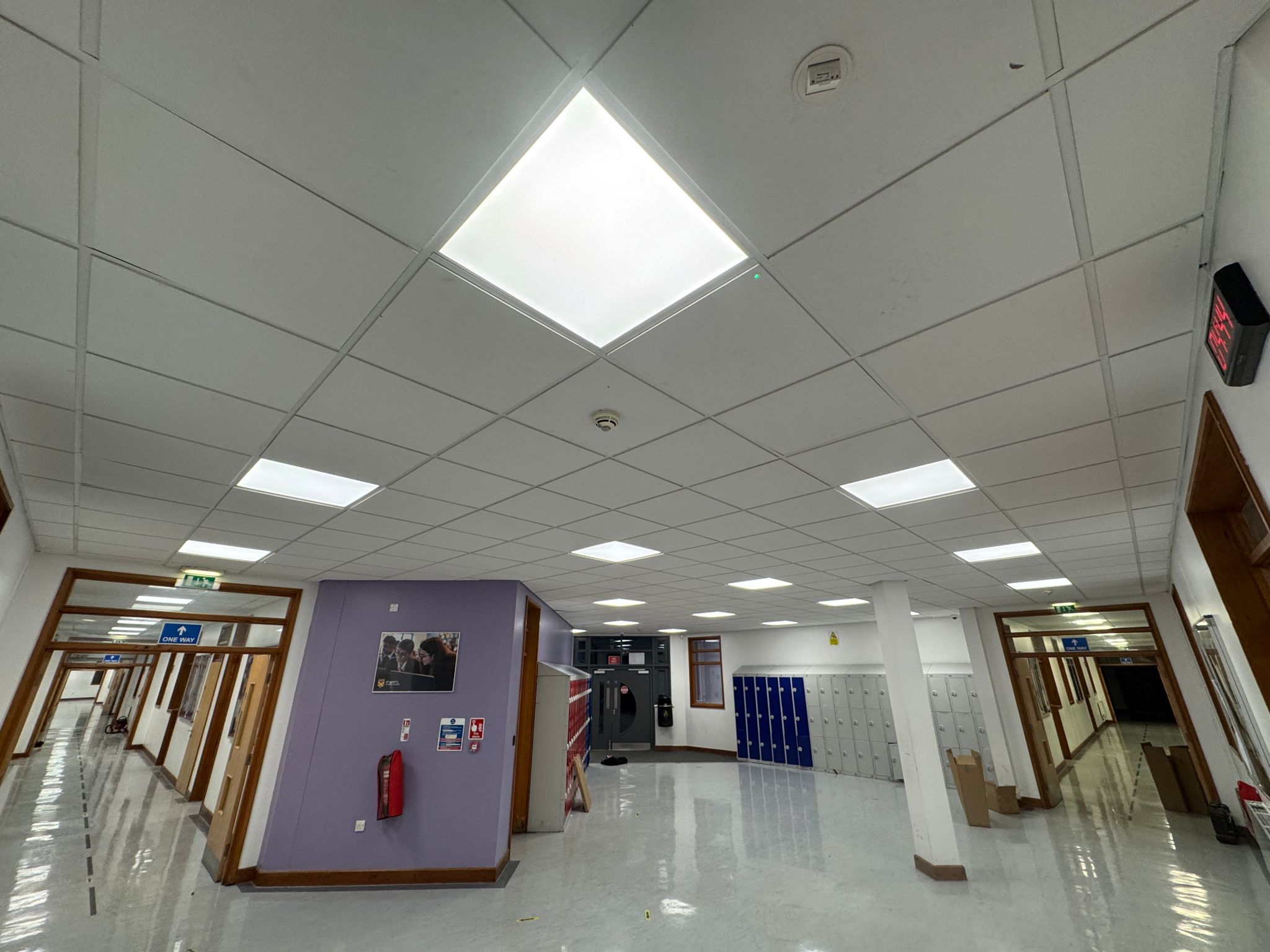
Scope: Replacement of 2,100+ luminaires across the school
Energy Reduction: 27% reduction in whole-site electricity consumption
Financial Saving: Approximately £63,000-£66,000 per year
Carbon Reduction: 40-45 tonnes CO₂e annually
The Challenge
St Mary’s CE High School, built in 2010, is a modern secondary school with an EPC B rating. While the building was considered efficient when constructed, a review of operational performance identified opportunities to reduce energy and maintenance costs.
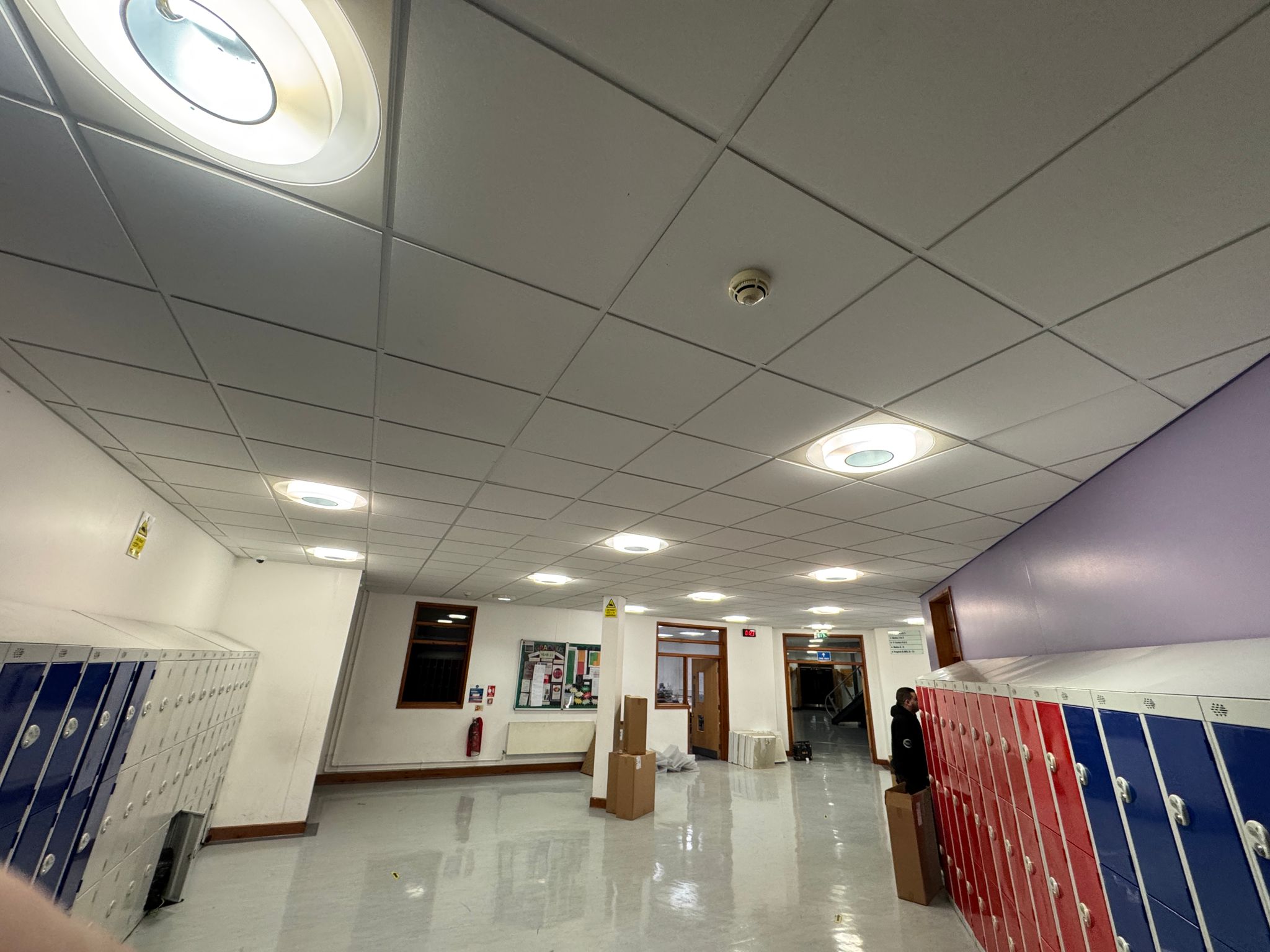
Much of the estate still relied on fluorescent lighting, which was relatively expensive to operate and maintain. In high-level areas such as halls and circulation spaces, lamp replacement required specialist access equipment.
This created additional maintenance costs and operational disruption while placing increased pressure on the site team. The school wanted to improve energy performance without committing valuable capital funding.
Work Undertaken
Warneford Consulting worked with the school to identify a solution that would improve efficiency while protecting capital reserves.
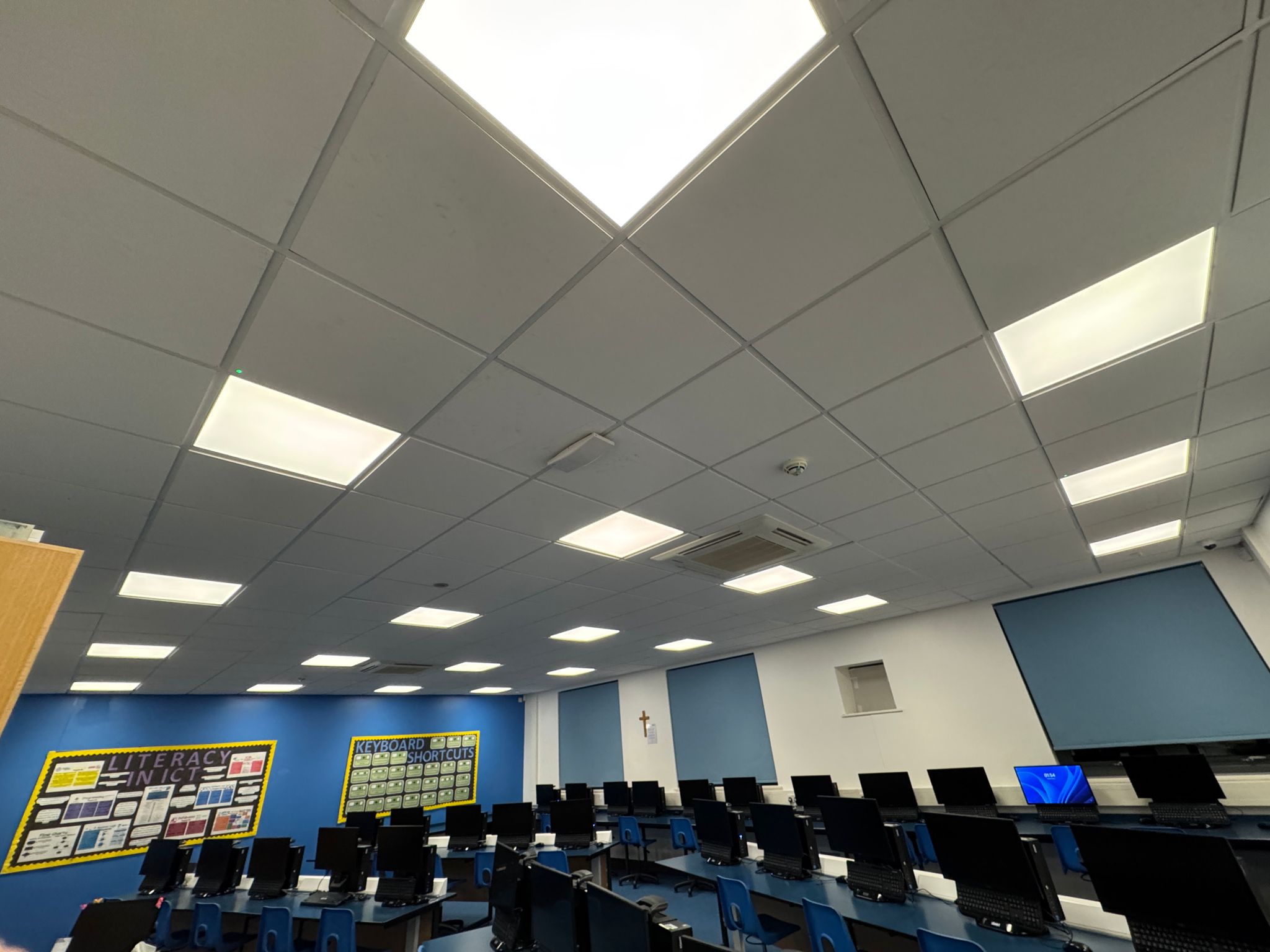
A full LED lighting upgrade was delivered under a Lighting as a Service (LaaS) funding model, removing the need for any upfront capital investment. Instead, the project is funded through the energy and maintenance savings generated by the new lighting installation.
The funding structure was designed to be fully compliant with the Academy Trust Handbook, ensuring governance and value-for-money requirements were met.
Delivered between January and March 2025, the project replaced more than 2,100 luminaires across the site.
The Results
Electricity consumption data shows a clear reduction in whole-site energy demand following completion of the upgrade.
A comparison between April-August 2024 and April-August 2025 shows a 27% reduction in electricity consumption, with average monthly usage falling from around 67, 800 kWh to 49, 500 kWh.
Based on billed data, the school is currently saving £5,000-£5,500 per month, equating to approximately £63,000-£66,000 annually.
The reduction also represents an estimated 40-45 tonnes of CO₂e saved each year.
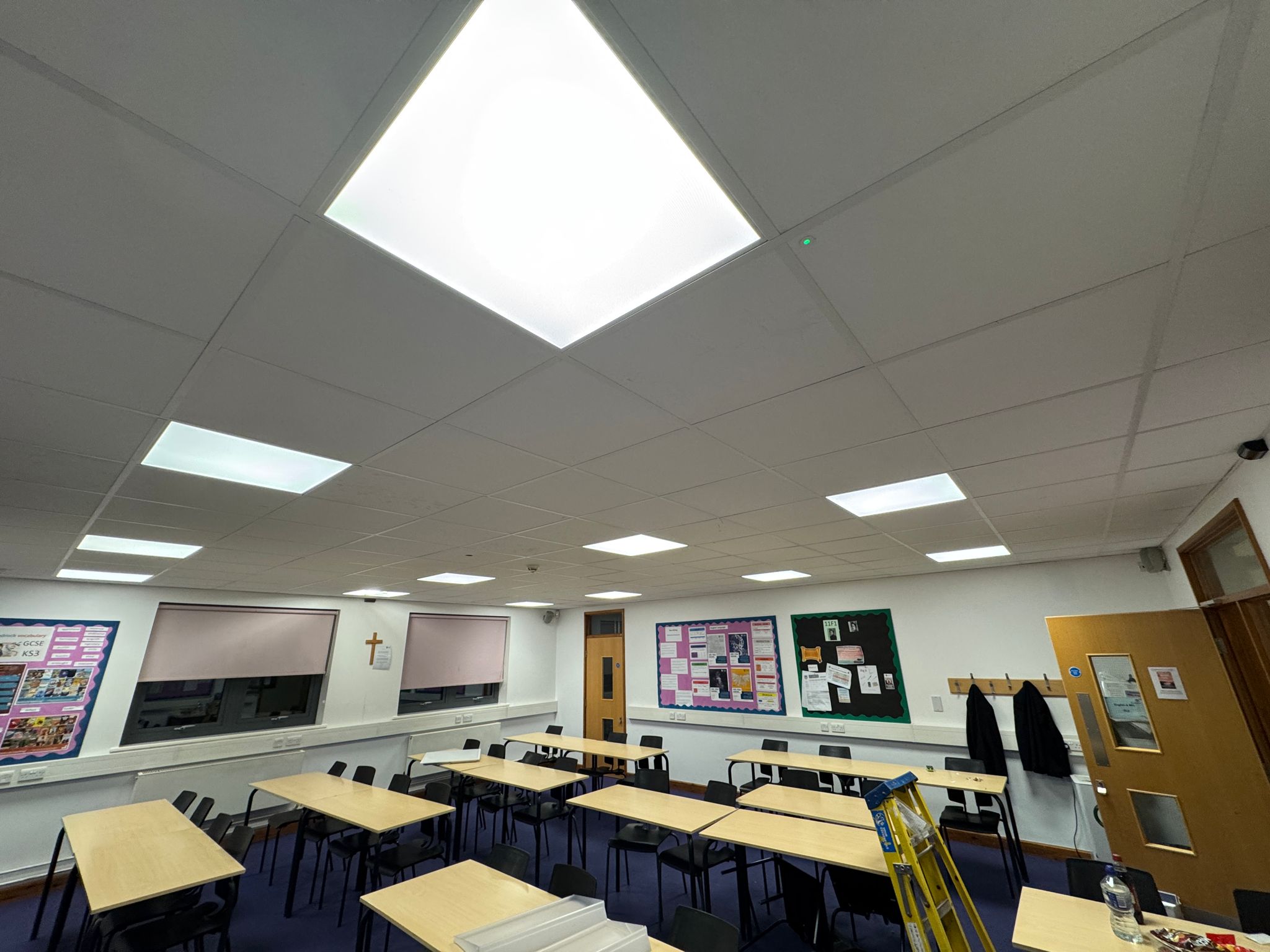
Lighting quality across the school has also improved significantly, creating brighter teaching spaces while reducing maintenance requirements for the site team.
Strategic Impact
By reducing electricity demand, the upgrade has effectively released additional capacity within the school’s electrical infrastructure. This avoids the need for costly supply upgrades and supports future decarbonisation projects.
The lighting upgrade also forms part of the school’s wider sustainability strategy. Improved energy monitoring is helping the school better understand consumption patterns and identify further efficiency opportunities.
Combined with the recent installation of solar photovoltaic panels, the school is now well positioned to continue reducing energy costs and carbon emissions.
Client Testimonial
